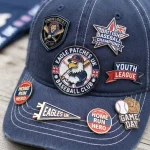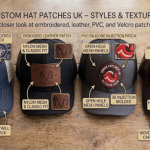
Choosing between embroidered and woven patches is one of the first questions anyone ordering custom patches UK asks. Both types look sharp, both are durable, and both carry serious heritage in uniform, military, and fashion applications across Britain.
But they are made in fundamentally different ways, and that affects everything from the level of detail you can achieve to how the finished patch feels on your jacket.
This guide walks through the production process, the practical differences, and the use cases where each type genuinely excels, giving you the information to make the right call before you order.
What Are Embroidered Patches?
Embroidered patches are created by using a needle and thread to stitch a design onto a base fabric, usually polyester twill or felt. The process is driven by a digitised file, a process known as embroidery digitizing, which converts your artwork into a set of machine instructions controlling stitch direction, density, and type.
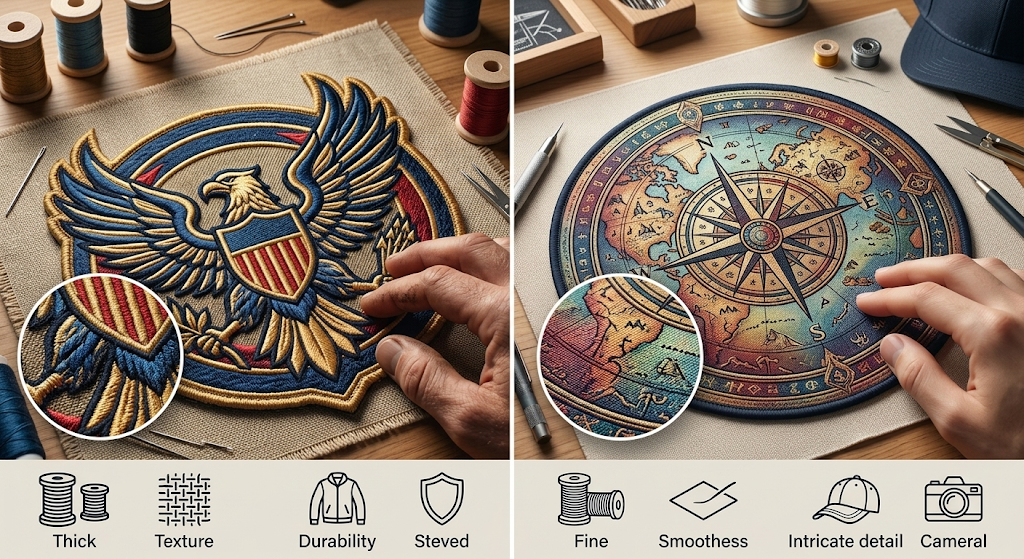
The result is a patch with a distinctly raised, three-dimensional surface. Run your fingers across an embroidered patch, and you can feel the individual threads pass. That texture is a large part of their appeal – it signals quality, craftsmanship, and permanence in a way flat printing simply cannot match.
How Embroidered Patches Are Made
- Artwork is converted via digitizing software into a stitch file (.DST, .PES, or similar).
- A commercial embroidery machine stitches the design onto a stabilised backing fabric.
- The patch is cut to shape – either with a merrowed border, a laser-cut edge, or a hot-cut finish.
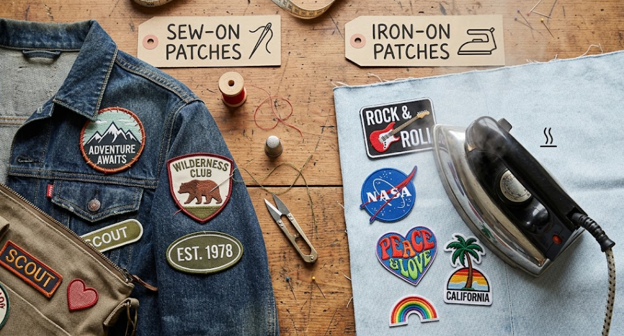
- A backing (iron-on, velcro, sew-on, or adhesive) is applied.
Key Characteristics of Embroidered Patches
- Raised, tactile 3D surface.
- Works best for designs over 2 inches in size.
- Bold colours and high contrast logos reproduce extremely well.
- Fine text under 4pt or thin lines can become unclear at smaller sizes.
- Thread count is lower than woven, so gradients require careful digitizing.
What Are Woven Patches?
Woven patches are produced on a loom, not an embroidery machine. The design is created by interlacing threads horizontally and vertically as part of the fabric structure itself – similar in concept to how a woven label inside a garment is made. Because finer threads are used and the interlacing process is more precise, woven patches can hold significantly more detail per square centimetre than their embroidered counterparts.
The surface of a woven patch is smooth and flat. They are lighter in weight, which makes them a natural fit for embroidered name patches and custom uniform patches where a neat, clean appearance without added bulk matters.
How Woven Patches Are Made
- Artwork is translated into a weave programme (warp and weft thread instructions).
- A Jacquard loom or similar industrial weaving machine produces the patch panel.
- Panels are cut to shape and edge-finished.
- A backing is applied, as with embroidered patches.
Key Characteristics of Woven Patches
- Flat, smooth, almost fabric-printed appearance.
- Capable of reproducing fine lines, small text, and complex gradients.
- Works well at sizes from 1 inch upward.
- Lighter and thinner than embroidered patches.
- Slightly less pronounced at distance – the visual impact is subtler.
Embroidered vs Woven Patches – Side-by-Side Comparison
| Feature | Embroidered Patches | Woven Patches |
| Production Method | Thread stitched over a twill/felt base | Thread woven into fabric on a loom |
| Thread Count | Lower – thicker threads, raised texture | Higher – finer threads, flat surface |
| Detail Level | Good for bold logos and text | Excellent for fine lines and small text |
| Texture | 3D, raised, tactile feel | Flat, smooth, almost printed-like |
| Minimum Size | Best at 2″ or larger | Can work well from 1″ upward |
| Durability | Very high – threads are robust | High – tightly woven, very stable |
| Colour Blending | Visible steps between shades | Smooth gradients possible |
| Typical Uses | Uniforms, biker patches, military, sports | Name patches, badges, labels, morale patches |
| Cost (UK) | Moderate – depends on stitch count | Slightly lower at high volumes |
| Weight | Heavier due to layered stitching | Lighter and thinner |
Detail and Texture – The Core Trade-Off
The single biggest factor in choosing between these two patch types is the level of detail in your design. Embroidered patches excel when your design features bold shapes, thick lettering, and high contrast between relatively few colours. The raised thread surface adds drama and makes logos pop at a distance – which is why they are the default choice for motorcycle club patches, regimental badges, and sports team crests.
Woven patches come into their own when your artwork contains fine detail that embroidery simply cannot replicate cleanly. Thin borders, small printed-style text, complex illustrative elements, and photographic-quality gradients all sit better in the woven format. If you are ordering custom morale patches or custom military patches with detailed insignia, woven construction is worth serious consideration.
Durability – Which Lasts Longer?
Both patch types are built to last, but their durability profiles differ slightly. Embroidered patches use thick polyester thread stitched at high density, making them extremely resistant to abrasion and heavy field use. The backing fabric provides additional structural support. They can withstand repeated washing, rough outdoor conditions, and decades of wear when properly attached.
Woven patches are also highly durable because the threads form the fabric rather than sitting on top of it. There is less risk of threads snagging or pulling because the structure is fully interlocked. For items that will be washed frequently, such as workwear and school uniforms, woven patches often hold their colour and shape particularly well.
In practice, for extreme outdoor or tactical use, embroidered patches have a slight edge due to sheer thread volume. For everyday uniform and workwear applications, the durability of woven patches is more than adequate.
Cost Comparison – Embroidered vs Woven Patches UK
Pricing for both types depends primarily on order quantity, size, and design complexity. As a general rule in the UK market:
- Embroidered patches are priced by stitch count. A simple, bold logo will cost less than a dense, fully-filled design of the same size.
- Woven patches are typically priced by size and colour count. Fine detail does not significantly increase the cost the way high stitch counts do in embroidery.
- At small quantities (under 50 pieces), embroidered patches can be slightly more economical because the minimum setup costs for woven production are sometimes higher.
- At high volumes (500+ pieces), woven patches often become more competitive per unit.
When to Choose Embroidered Patches
Choose custom embroidered patches when:
- Your design features bold text, thick logos, or strong geometric shapes.
- You want a raised, premium tactile finish that commands attention.
- The patch will be worn as a central identity piece on a jacket, vest, or uniform.
- You are ordering for biker clubs, military units, sports teams, or corporate branding.
- Size is 2 inches or larger.
- You want a merrowed border for a traditional, classic patch aesthetic.
When to Choose Woven Patches
Choose custom woven patches when:
- Your design includes fine lines, intricate artwork, or small, precise text.
- The patch needs to be small (under 2 inches) without sacrificing detail.
- Weight and thickness matter – workwear, shirts, or lightweight garments.
- You need uniform name labels or rank tabs at high volume.
- You want a smooth, near-printed finish rather than a textured surface.
- Gradient shading or photographic colour transitions are part of the design.
Quick Decision Guide
| Choose… | …When You Need |
| Embroidered Patches | Bold branding, raised texture, military/biker identity, large designs (2″+ recommended) |
| Woven Patches | Fine detail, small text, smooth finish, lightweight feel, high-volume uniform labels |
| Both / Hybrid | Mixed sets (e.g. large chest patch embroidered + small name tab woven) for a complete uniform solution |
Other Patch Types Worth Knowing
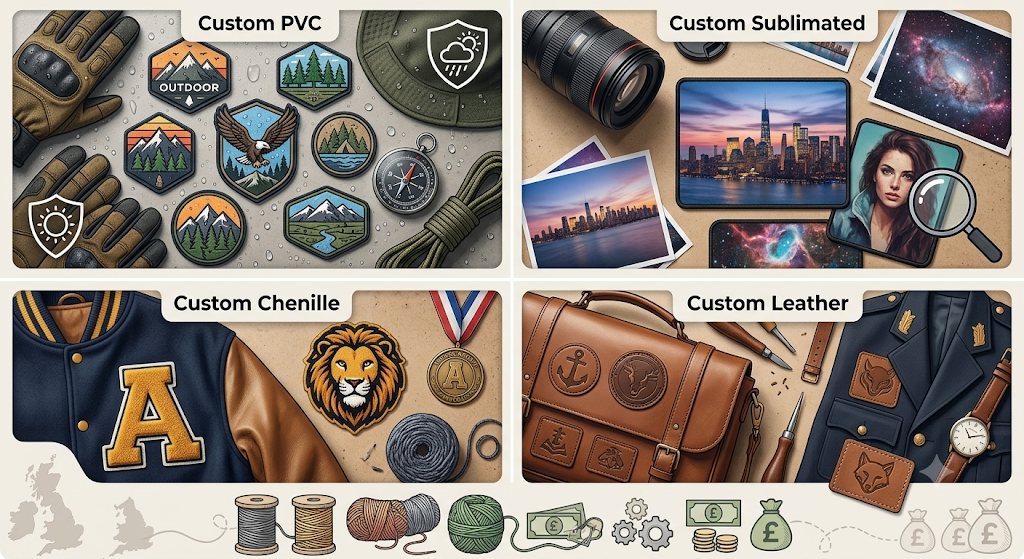
Embroidered and woven patches are the two most commonly compared formats, but they are not the only options available. Depending on your project, the following alternatives may also be relevant:
Custom PVC patches for outdoor use offer a rubber-like, weather-resistant finish that suits tactical and outdoor applications where traditional fabric patches would degrade.
Custom sublimated patches use dye-sublimation printing directly onto fabric, allowing photographic full-colour reproduction without any thread – ideal for complex imagery.
Custom chenille patches use a looped yarn construction for a thick, varsity-style aesthetic commonly seen on letterman jackets and sports awards.
Custom leather patches provide a premium, distinctive look for brand labels, bag patches, and high-end uniform applications.
How to Order Embroidered or Woven Patches in the UK
Ordering either patch type from Eagle Patches UK follows the same straightforward process:
- Share your artwork – a vector file (AI, EPS, PDF) is ideal, but high-resolution PNG or JPG also works. The design team handles conversion if needed.
- Choose your patch type – embroidered or woven – along with size, quantity, and backing option.
- Receive a digital proof and approve it before production begins.
- Production completes within the agreed timeline, with free UK delivery included.
Free design assistance is available for every order, so if you are unsure whether your artwork suits embroidery or woven production, the team can advise before anything is committed.
Frequently Asked Questions
What is the main difference between embroidered and woven patches?
Embroidered patches are made by stitching thread onto a backing fabric, creating a raised surface. Woven patches are produced on a loom, with threads interlaced to form the fabric itself, resulting in a flat, smooth finish. The key practical difference is detail: woven patches handle fine lines and small text better, while embroidered patches offer a bold, textured look.
Are woven patches cheaper than embroidered patches?
Not always, it depends on quantity and design complexity. At high volumes (500+ pieces), woven patches can be more cost-effective per unit. At lower quantities, embroidered patches can be comparable or cheaper, especially for simple designs. The best approach is to request a quote for both types with your specific artwork and quantity.
Which patch type is more durable?
Both are highly durable and suitable for regular washing and heavy use. Embroidered patches have a slight edge in extreme outdoor or abrasion-heavy environments due to the volume of thread. Woven patches are exceptionally stable for workwear and uniform applications because the threads are fully interlocked within the fabric structure.
Can I get a small patch made in embroidery?
Embroidery works best at 2 inches or larger. Below that size, thick threads begin to crowd together and fine details can lose clarity. If your design needs to be under 2 inches or includes small text, woven construction is the better choice.
Do woven patches look as professional as embroidered ones?
Yes – woven patches carry a clean, crisp, professional appearance that works particularly well for corporate uniforms, name badges, and rank tabs. The finish is different from embroidery but equally refined. Many premium uniform programmes use both types together, a larger embroidered chest badge paired with woven name and rank tabs.
What backing options are available for both patch types?
Both embroidered and woven patches can be supplied with a range of backing options including iron-on, sew-on, velcro hook and loop, adhesive, and safety pin. The backing choice depends on how and where the patch will be worn or applied.
Is embroidery digitizing required for embroidered patches?
Yes. Before an embroidered patch can be produced, your artwork must be converted into a stitch file through embroidery digitizing. This step defines how every thread in the design is placed. Custom Patches UK handles digitizing as part of the order process at no additional charge.
How does the patch comparison change for military or tactical use?
For custom military patches, both types are used. Embroidered patches are traditional for large chest or arm insignia where a bold, formal appearance is required. Woven patches or PVC patches are increasingly common for morale and subdued tactical patches, where fine detail and lighter weight are priorities.
Choosing the Right Patch for Your Design
Both embroidered and woven patches offer excellent durability and a professional appearance, but the right choice depends on your design. Embroidered patches are ideal for bold logos, larger designs, and applications where a raised, textured finish creates greater visual impact. Woven patches are better suited to intricate artwork, fine details, and small text, providing a smooth and precise finish.
By considering your design complexity, patch size, and intended use, you can select the option that delivers the best results. Whether you choose embroidered or woven patches, a professionally made patch from Eagle Patches UK will ensure your brand, team, or organisation stands out with quality and style.