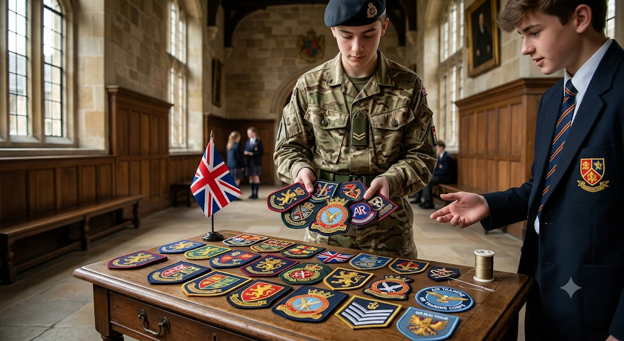
Walk through the corridor of any British secondary school or watch a cadet unit fall in on a parade ground, and you will notice the same small detail everywhere: stitched badges. Blazer pockets carry embroidered crests, PE kits carry house colours, and cadet sleeves carry regimental flashes and rank slides, all built from thread rather than ink. This is not a style preference left over from tradition alone.
Ask a headteacher or a Contingent Commander why the uniform still relies on embroidered patches instead of printed badges or plastic name tags, and the answer almost always comes down to durability, discipline, and identity.
This guide looks at exactly why schools and cadet forces across the UK, including the Army Cadet Force (ACF), Combined Cadet Force (CCF), Sea Cadets, and Air Cadets, continue to choose embroidered badges in 2026, how they compare with other patch types, and what to look for from a UK patch supplier.
What Are Embroidered Patches, and Why Do Institutions Rely on Them?
Embroidered patches are fabric badges made by stitching a design directly onto a backing material with coloured thread, creating a raised, textured emblem that can be sewn, ironed, or Velcro-mounted onto a garment. Schools use this technique for blazer crests, house badges, and kit branding.
Cadet forces use it for rank slides, unit flashes, qualification badges, and service insignia. Because the artwork is built from thread rather than printed ink, custom embroidered patches keep their colour, shape, and texture through years of washing, ironing, and daily handling, which is precisely what a school uniform or a field uniform demands.
A Brief History: Stitched Badges in British Uniform Culture
British school blazers have carried embroidered crests since the Victorian era, when a badge signalled house, form, or scholarship status at a glance. Cadet forces inherited the same stitched badge tradition from the regular armed forces, where embroidered rank slides and unit patches have identified soldiers, sailors, and airmen for more than a century. That inherited discipline is why cadet units still follow strict badge specifications today, down to thread colour, badge size, and placement on the sleeve.
Why Schools Choose Embroidered Patches Over Other Options
Durability Through Daily Wear and Washing
A school uniform goes through hundreds of wash, tumble-dry, and iron cycles across a single academic year. Printed or heat-transfer badges tend to crack, fade, or peel within a few terms. Stitched thread does not flake in the same way, which is why blazer crests and jumper badges made from embroidery routinely outlast the rest of the garment.
A Professional, Polished Appearance
Raised stitching gives a badge depth, texture, and a formal finish that flat printing cannot match. For schools that want their crest to look established and their uniform to photograph well for open days and prospectuses, embroidery is the more presentable option.
Reinforcing School Identity and Pride
A well-stitched crest on a blazer, tie, or PE kit does more than identify the wearer. It reinforces house colours, school values, and a sense of belonging from Reception through to sixth form. Many schools extend this consistency across custom uniform patches for sports kits, house teams, and staff wear, so the same visual identity appears on every garment a pupil owns.
Cost-Effective for Bulk Ordering
Because schools order badges in the hundreds or thousands, per-unit pricing matters. A UK patch maker offering a low minimum order quantity, free design proofs, and fast turnaround makes it realistic for a school to reorder mid-year for new intakes without holding excess stock.
Why Cadet Forces Rely on Embroidered Patches
Rank and Unit Identification
In cadet forces, a badge is functional information, not decoration. Rank slides, unit flashes, and qualification badges tell an instructor or fellow cadet exactly who they are looking at within seconds. This visual shorthand only works if every badge is stitched to a consistent size, colour, and placement standard, which embroidery delivers far more reliably than printed alternatives.
Compliance With Official Uniform Regulations
ACF, CCF, Sea Cadet, and Air Cadet uniforms follow published dress regulations that specify exact badge designs, thread colours, and backing types, often including Velcro-hook backing so rank slides can be changed as a cadet is promoted. A supplier experienced in custom military patches understands how to match these specifications precisely, rather than approximating them.
Durability in Field and Outdoor Conditions
Cadet uniforms see far rougher treatment than a classroom blazer: field exercises, adverse weather, and heavy-duty laundering after camp. Embroidered badges hold their stitching and colour under this kind of use in a way that printed or vinyl badges simply do not.
Embroidered Patches vs Other Patch Types: Which Wins for Institutional Use?
Schools and cadet units are not limited to embroidered and printed patches alone. The table below compares the main patch types available from a UK manufacturer, and where each one fits best. For a deeper breakdown of embroidered versus printed options specifically.
| Patch Type | Durability | Detail Level | Typical Use in Schools/Cadets | Relative Cost |
|---|---|---|---|---|
| Embroidered | Very high, wash and wear resistant | Good for bold logos and text | Blazer crests, rank slides, unit flashes | Moderate |
| Woven | High, thin and flat | Excellent for fine detail and small text | Name tapes, small qualification badges | Moderate |
| Printed/Sublimated | Lower, can fade or crack | Photo-realistic, unlimited colours | Event badges, temporary kit branding | Lower |
| PVC | Very high, waterproof | Bold, 3D moulded look | Outdoor kit bags, rugged accessories | Moderate-High |
For most blazer crests and cadet unit badges, embroidery remains the benchmark. Schools wanting extremely fine detail on a small badge sometimes pair it with custom woven patches, which sit flatter on the fabric and suit tightly packed text such as name tapes or small crests.
Common Patch Types Used Across Schools and Cadet Units
| Badge Type | Where It’s Worn | Typical Attachment |
|---|---|---|
| Blazer crest | Left breast pocket | Sewn |
| House badge | Blazer or jumper | Sewn or iron-on |
| Name tape | Inside collar or PE kit | Sewn |
| Rank slide | Shoulder epaulette | Slide-on / Velcro |
| Unit flash | Upper sleeve | Sewn or Velcro |
| Qualification badge | Sleeve or chest | Sewn |
Name tapes and small text badges are usually produced as custom name patches, which keep lettering crisp even at a small size, an important detail for schools labelling PE kits and cadet units marking personal equipment.
How Embroidered Patches Are Made
The process starts with digitising the school crest or cadet insignia into a stitch file that controls thread density, direction, and colour sequence. The design is then stitched onto backing fabric on an embroidery machine, trimmed to shape, and finished with a merrowed or heat-cut edge before the correct backing (sew-on, iron-on, or Velcro) is applied. A reputable supplier will send a free digital proof before production so a school or unit can approve colours and sizing ahead of a full run.
Sew-On vs Iron-On: Which Attachment Method Suits School and Cadet Uniforms?
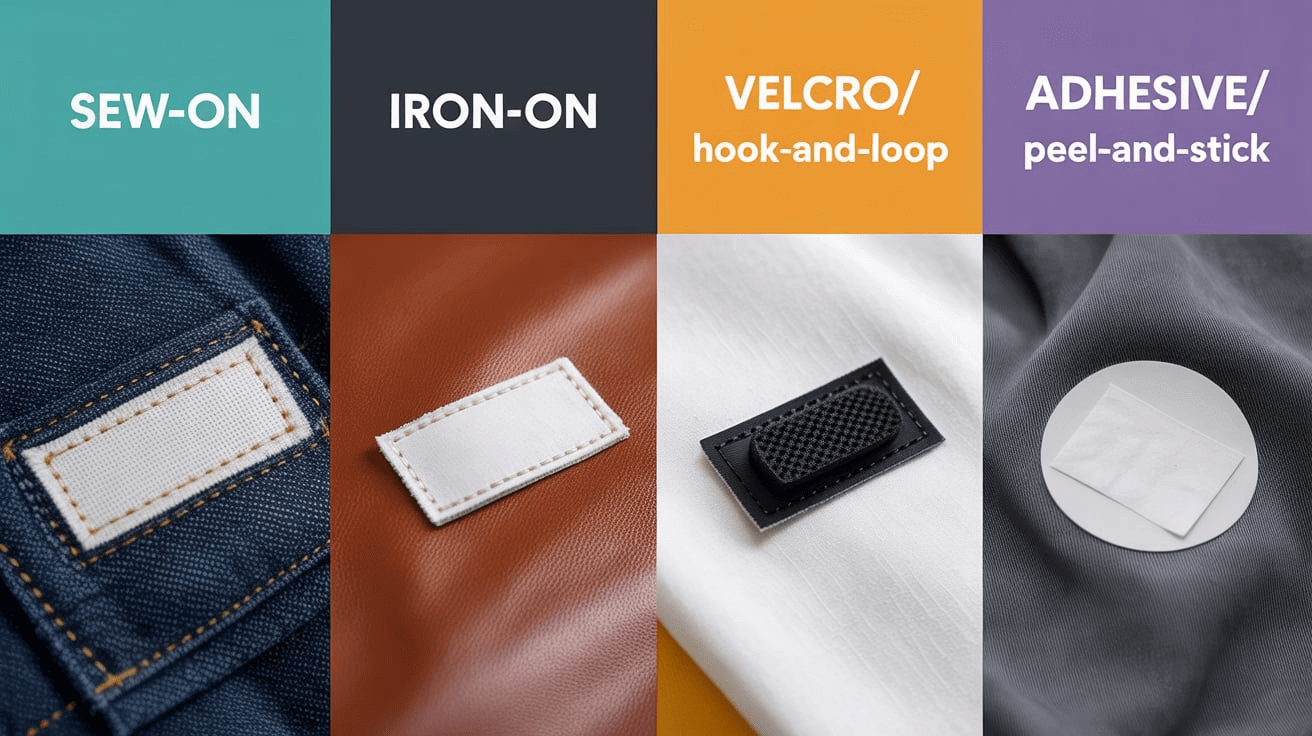
Both iron-on patches and sew-on patches are widely used, but they suit different situations, the short comparison for uniforms is below.
| Attachment | Best For | Considerations |
|---|---|---|
| Sew-on | Blazer crests, cadet rank slides, high-wash items | Most secure long-term, needs stitching time |
| Iron-on | Parent-applied badges, PE kit, quick turnaround | Fast to apply at home, can loosen on heavy synthetic fabrics |
| Velcro | Cadet rank slides that change with promotion | Easy to swap, requires a hook-and-loop backing set |
Choosing the Right Embroidered Patch Supplier for Schools and Cadet Forces
Not every patch maker is set up to handle institutional orders. Schools and cadet units should look for:
- UK-based production for faster turnaround and no import delays on term-time reorders.
- A low minimum order quantity so small units or single-year-group orders remain affordable.
- Free design proofs to confirm crest colours and badge sizing before full production.
- Experience with regulation insignia, particularly for cadet forces where badge specifications are fixed.
- A range of backing options, including sew-on, iron-on, and Velcro, to match different uniform items.
This is the standard the team at Custom Patches UK works to for every school and cadet order, combining UK manufacturing with a free design service and a low ten-piece minimum, so even a single form group or cadet detachment can order without excess stock.
Frequently Asked Questions
What are embroidered patches called on a school uniform?
They are usually called blazer badges, crests, or house badges, depending on where they sit on the uniform. Functionally, they are all embroidered patches stitched onto fabric.
Do cadet forces have official rules for badge design?
Yes. ACF, CCF, Sea Cadet, and Air Cadet units follow published dress regulations covering badge size, thread colour, and placement, and rank slides are typically fitted with Velcro backing so they can be updated as a cadet is promoted.
What is the minimum order quantity for custom embroidered patches?
Minimum order quantities vary by supplier, but a low threshold, around ten pieces, makes it realistic for a single class, house, or cadet detachment to order without committing to a large batch.
How long do embroidered badges last on a uniform?
Well-stitched embroidered badges typically outlast the rest of the garment, withstanding hundreds of wash and iron cycles without cracking or fading, unlike printed or heat-transfer alternatives.
Sew-on or iron-on: which is better for school blazers?
Sew-on is generally more secure for blazer crests that need to survive a full academic year of wear and washing. Iron-on suits items parents apply at home, such as PE kit labels, where speed matters more than maximum durability.
Can a supplier recreate an existing cadet or school badge design?
Yes. A patch maker experienced with institutional orders can digitise an existing crest, unit flash, or rank insignia from artwork or a physical sample and match it precisely, including official thread colours.
How much do custom embroidered patches cost for a school or cadet unit?
Cost depends on badge size, stitch density, and order quantity, but bulk institutional pricing typically brings the per-badge cost down significantly compared with small retail orders. Requesting a free quote is the most accurate way to budget for a specific badge design and order size.
Choose Quality Patches That Stand the Test of Time
Embroidered patches remain the standard for British schools and cadet forces because they solve a practical problem, not just an aesthetic one: they survive daily wear, meet regulation standards, and carry institutional identity in a way ink and plastic cannot.
Whether a school needs a full run of blazer crests or a cadet unit needs regulation-accurate rank slides and unit flashes, working with a supplier that understands both the craft and the compliance side of the job makes the process far simpler.
Browse the full range of custom patches UK at Eagle Patches UK or request a free design proof to get an exact quote for a school or cadet order.